
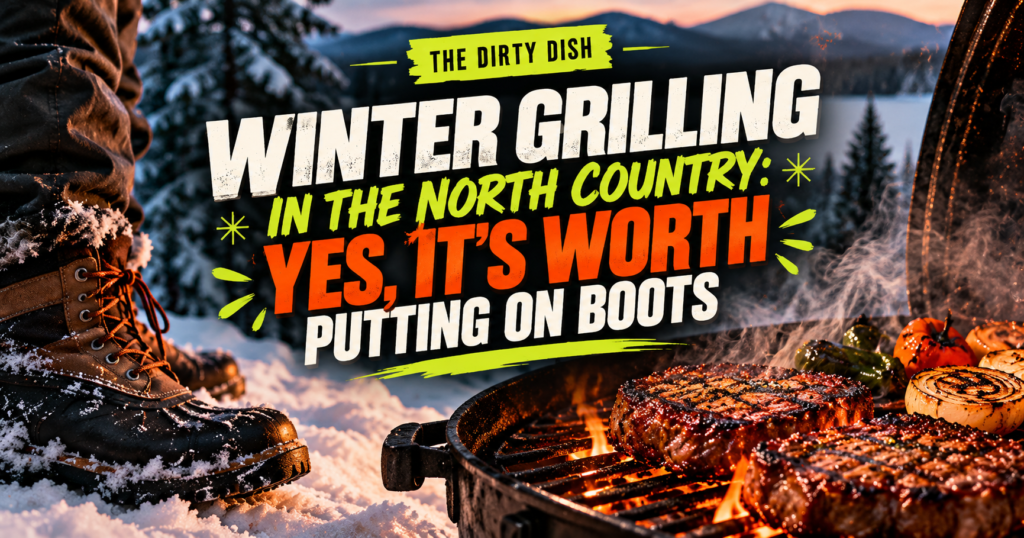
When the snowbanks are taller than the dog, grilling starts to look like an extreme sport. Up here in northern New Hampshire, there’s no rule saying the grill has to hibernate until Memorial Day. There is, however, a rule about not setting your deck, siding, or eyebrows on fire.
Cold-weather grilling works with a little planning. The main challenges are wind, fuel consumption, heat recovery, traction, and the temptation to put the grill somewhere enclosed. That last one is never worth it: propane and charcoal grills produce dangerous gases and must be used outdoors with the clearances required by the manufacturer.
Put safety ahead of convenience
Choose an outdoor spot with a solid, stable surface and enough clearance from walls, siding, railings, roofs, and overhangs. Never use a charcoal or gas grill in a garage, screened porch, breezeway, tent, or other enclosed or partially enclosed space. Carbon monoxide can build up without warning.
Clear ice and snow from the walking path so you aren’t carrying a platter of raw chicken across a skating rink. Make sure the grill is free of snow and ice before lighting, and inspect fuel lines, vents, and grease collection components.
If the wind is severe or conditions feel unsafe, cook inside. The dinner is not worth a trip to the emergency department.
Expect a slower preheat
A cold lid and a biting wind pull heat away from the cooker. Give the grill more time to stabilize. Don’t assume a familiar burner setting will give the same grate temperature in January that it did in July. A thermometer near the cooking surface is useful, and an instant-read food thermometer is essential.
On charcoal, plan for additional fuel in cold weather, but follow the manufacturer’s lighting and airflow instructions. Keep extra fuel stored safely and away from the heat. On a gas grill, monitor fuel supply and check connections before cooking.
Make the menu winter-friendly
Short, forgiving cooks are a good place to begin. Burgers, chicken thighs, sausages, sturdy vegetables, and covered potato packets make a lot more sense than a complicated dish requiring a dozen lid openings. Use a two-zone setup so you can finish over direct heat without exposing thicker cuts to nonstop flames.
A tray of Masters Potatoes seasoned with Side Hustle can roast indoors while the grilled protein finishes outdoors. That’s not cheating. That’s dinner planning. Check Legacy Acres’ Farm Stand for seasonal potato availability.
Do the prep indoors
Chop vegetables, season meat, assemble trays, and organize tools before you step outside. Keep raw meat chilled until cooking. Have separate platters for raw and cooked food. Don’t bring the cooked chicken back onto the raw-chicken platter because your mittens made you impatient.
Use gloves that allow a secure grip but won’t melt near the grill. Have lighting for dark afternoons, and keep pets and children away from the work area.
Choose rubs that suit the season
Camp Fire brings smoked paprika, dark coffee, and chipotle to cold-weather beef. Hard Maple is a natural match for pork in a maple-country winter. Bird Dog gives chicken an herby, lemony lift when you’re tired of heavy food. These blends are tasty in the oven, too, when the weather wins.
Finish strong
Let the grill cool according to its instructions, manage ashes and grease safely, and use the correct weatherproof cover after the cooker is cool. Don’t dump still-hot charcoal into snow beside your house or store greasy trays where animals can reach them.
Winter grilling isn’t about proving how tough you are. It’s about getting a good meal in the middle of a long season. If the only thing between you and a great burger is a pair of boots and a little snow shovel work, that’s a pretty fair trade.
Plan the plate: Shop rubs at Dick’s Rubs and look for seasonal pantry staples at Legacy Acres.