
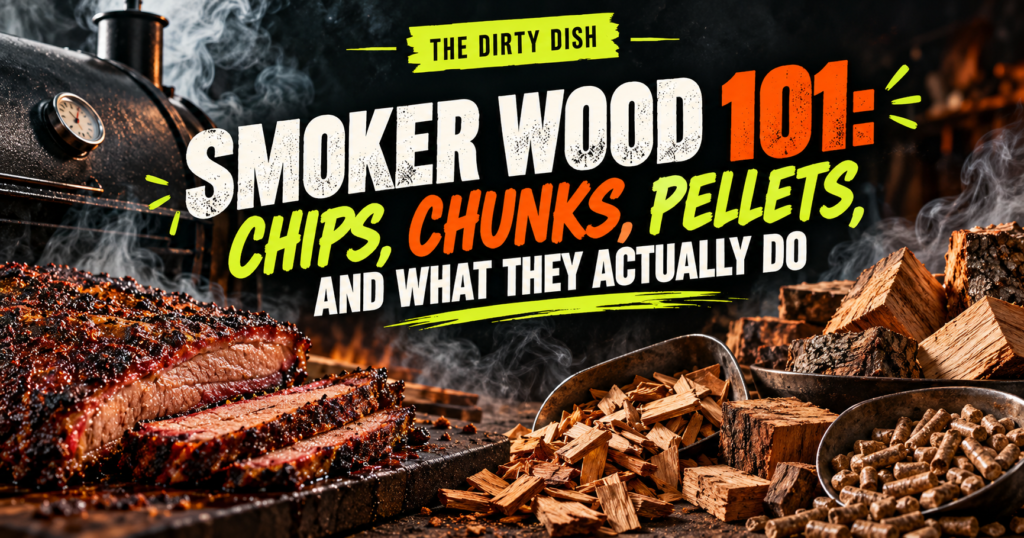
Apple, cherry, hickory, oak, maple, pecan. Walk into the grill aisle and the wood selection starts to look like a very enthusiastic forest. Do you need all of it? No. Should you learn the difference between chips, chunks, and pellets before dumping half a bag onto a fire? Absolutely.
Smoke should complement your food, not make it taste like an ashtray. The trick is a clean fire, the right fuel for your equipment, and restraint.
Chips, chunks, and pellets: choose the form first
Wood chips are small pieces that ignite and burn relatively quickly. They suit some gas-grill smoker boxes and short charcoal cooks, but often need replenishing. Keep them contained exactly as the equipment manual instructs; never scatter chips inside burners or electrical components.
Wood chunks are larger and burn longer. They’re common in charcoal smokers and kettle grills because a chunk or two can sustain smoke without constant refilling. Too many chunks can overwhelm a small cook.
Pellets are compressed hardwood fuel made for pellet smokers or equipment specifically rated for them. Buy food-grade cooking pellets intended for your grill. Heating pellets and mystery offcuts do not belong anywhere near dinner.
Some cooks swear by soaked chips; others use them dry. The USDA describes soaking as one technique for managing flare-ups, but the practical answer is to follow your smoker-box or grill instructions. Wet wood must dry before producing useful smoke, and extra steam is not the same thing as better flavor.
A beginner’s map to smoking woods
| Wood | General character | Try it with |
|---|---|---|
| Apple | Mild and gently sweet | Poultry, pork, vegetables |
| Cherry | Mild and aromatic | Pork, chicken, beef |
| Maple | Mild, warm, and rounded | Pork, poultry, winter squash |
| Pecan | Nutty, moderate strength | Pork shoulder, turkey, beef |
| Oak | Balanced, firm smoke | Brisket, beef roasts, sausage |
| Hickory | Assertive, classic smoke | Pork shoulder, ribs, hearty cuts |
These are tasting tendencies, not laws of nature. Food size, cook duration, airflow, and rub choice matter just as much as wood species. Start with a modest amount and learn what your own cooker produces.
Clean smoke beats impressive smoke
A giant cloud billowing from your cooker looks dramatic in a photograph. It can also signal smoldering fuel and bitter flavors. Once the fire stabilizes, aim for a small, steady output and a well-ventilated cooker. A heavy dose of dirty smoke won’t fix underseasoned meat or poor temperature control.
Use dry, untreated hardwood intended for cooking. Avoid painted, pressure-treated, glued, or otherwise chemically treated wood. Never substitute scrap lumber from the garage. Even a farm has some things that belong nowhere near the smoker.
Match wood to the rub
Hard Maple + apple or maple wood: A friendly combination for pork tenderloin, chicken, or ham. The maple sugar in Hard Maple makes a warm, sweet-savory pairing, especially if you finish over controlled indirect heat.
Camp Fire + oak: A natural match for beef or venison. Camp Fire already carries smoked paprika, coffee, and chipotle, so use the wood for depth, not punishment.
Bird Dog + cherry: The herbs and lemon peel in Bird Dog fit poultry beautifully, especially when the smoke stays on the mild side.
Shore Thing + very light apple smoke: Fish and shrimp are delicate. Keep the smoke gentle and the cook short, and don’t try to turn a fillet into a brisket.
How much wood should you add?
Less than your enthusiasm suggests. For a small kettle cook, begin with a chunk or a small handful of chips if the manufacturer recommends that method. Taste the finished food and adjust next time. With a pellet grill, manage smoke according to its controls and fuel requirements.
Put food on after the cooker has reached a stable operating temperature. Keep the lid closed as much as reasonably possible. Remember that cooking times are guidelines, not safety measures. USDA recommends keeping hot-smoking temperatures between 225°F and 300°F and monitoring the meat’s internal temperature with a separate thermometer.
First-timer shopping list
Skip the twelve-flavor variety pack. Start with apple, oak, and either hickory or cherry. Those three give you mild, versatile, and assertive options without turning your shed into a lumber yard.
What’s on the menu? Find the seasonings at Dick’s Rubs and round out the cook with available farm ingredients from Legacy Acres.
Further reading: USDA: Smoking Meat and Poultry.